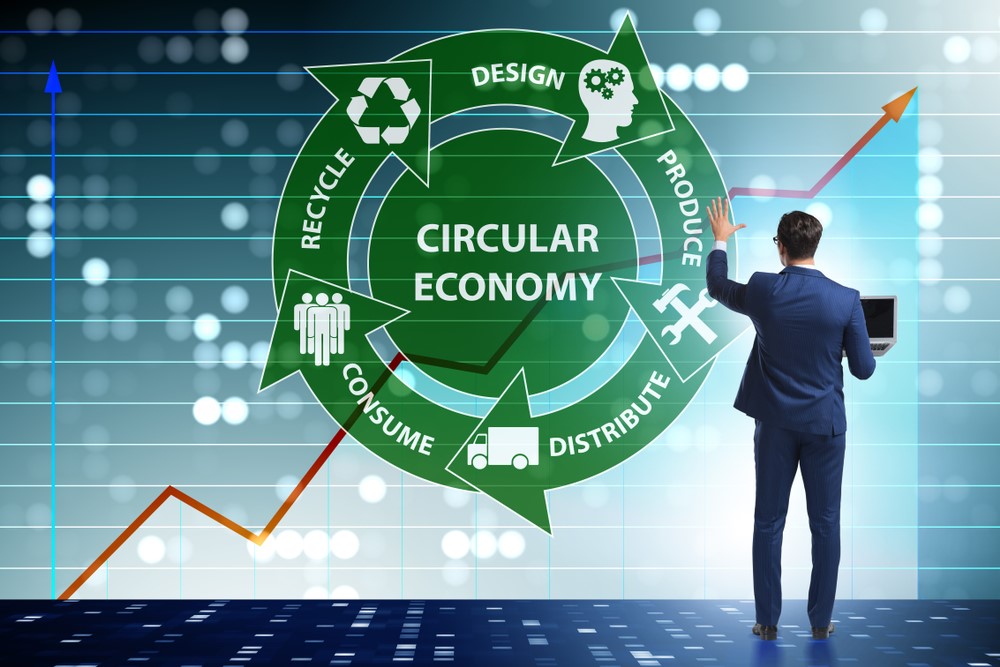
A circular economy represents a departure from traditional manufacture and consumption patterns. It is intended to reduce consumption of resources by designing waste out of the system. The concept is not new, but results from this ViewPoint survey aimed at gaining More than half of respondents, report they are beginning to explore the issue and prepared to adopt at least one model within the next 3-5 years. Around 12% report circularity being core to their business strategy but only 5.9% indicate a mature approach.understanding of adoption, new business models, actions and benefits applied and achieved by companies transitioning suggest limited take up.
This approach focuses on:
- Designing out waste from the beginning
- Extending product life cycles
- Regenerating natural systems
- Recovering materials at end-of-life
By shifting toward circular systems, organisations can reduce environmental impact while improving operational efficiency and long-term resilience.
Key Findings from Global Circular Economy Research
Research conducted by DNV in collaboration with the World Business Council for Sustainable Development (WBCSD) highlights the growing global interest in circular economy strategies.
The findings show that while many organisations recognise the importance of circular transformation, only a smaller percentage have fully integrated circular economy principles into their core business models. However, momentum is increasing, with more companies planning to adopt at least one circular practice within the next few years.
Common drivers identified in the research include:
- Rising material costs
- Supply chain instability
- Climate and sustainability commitments
- Regulatory pressures
- Investor and stakeholder expectations
These factors are accelerating the transition toward circular economic systems worldwide.
Circular Economy Business Models in Practice
Businesses adopting circular economy principles are exploring innovative models that move beyond traditional ownership and consumption patterns. Examples include:
1. Product Life Extension
Companies are designing products that are easier to repair, upgrade, or refurbish, reducing waste and maximizing value retention.
2. Product-as-a-Service
Instead of selling products outright, organisations provide access through leasing or service agreements. This model encourages durability and resource efficiency.
3. Resource Recovery
Materials are recovered at end-of-life and reintegrated into production cycles, reducing dependency on virgin resources.
4. Circular Supply Chains
Companies collaborate with suppliers and customers to improve traceability, material efficiency, and lifecycle transparency.
These circular economy strategies not only reduce environmental impact but can also create competitive advantage.
Why it Matters for Sustainable Procurement
The circular economy plays a critical role in advancing sustainable procurement practices aligned with ISO 20400 principles. Procurement teams influence material selection, supplier engagement, product specifications, and lifecycle considerations.
By integrating this criteria into purchasing decisions, organisations can:
- Reduce waste across value chains
- Improve resource efficiency
- Lower carbon emissions
- Support ethical and responsible sourcing
- Strengthen long-term supply security
Sustainable procurement becomes a powerful lever for accelerating circular transformation.
The Broader Impact of a Circular Economy Transition
Transitioning to a circular economy delivers benefits beyond individual organisations. At a global level, circular systems contribute to:
- Reduced greenhouse gas emissions
- Lower extraction of finite resources
- Increased innovation and new business opportunities
- Greater economic resilience
- Progress toward sustainable development goals
The research by WBCSD and DNV demonstrates that while the transition is still evolving, awareness and strategic commitment to its principles are steadily growing across industries and regions.
Frequently Asked Questions
What is a circular economy?
A circular economy is a system where products and materials are kept in use for as long as possible through reuse, repair, refurbishment, remanufacturing, and recycling.
How does the circular economy benefit businesses?
It reduces material costs, improves supply chain resilience, strengthens sustainability performance, and creates new revenue opportunities.
Is the circular economy only about recycling?
No. Recycling is only one component. A circular economy prioritises designing products to eliminate waste, extending product lifespans, and rethinking ownership models.
How does circular economy align with ISO 20400?
Circular economy principles support sustainable procurement by encouraging responsible sourcing, lifecycle thinking, and collaboration across supply chains.