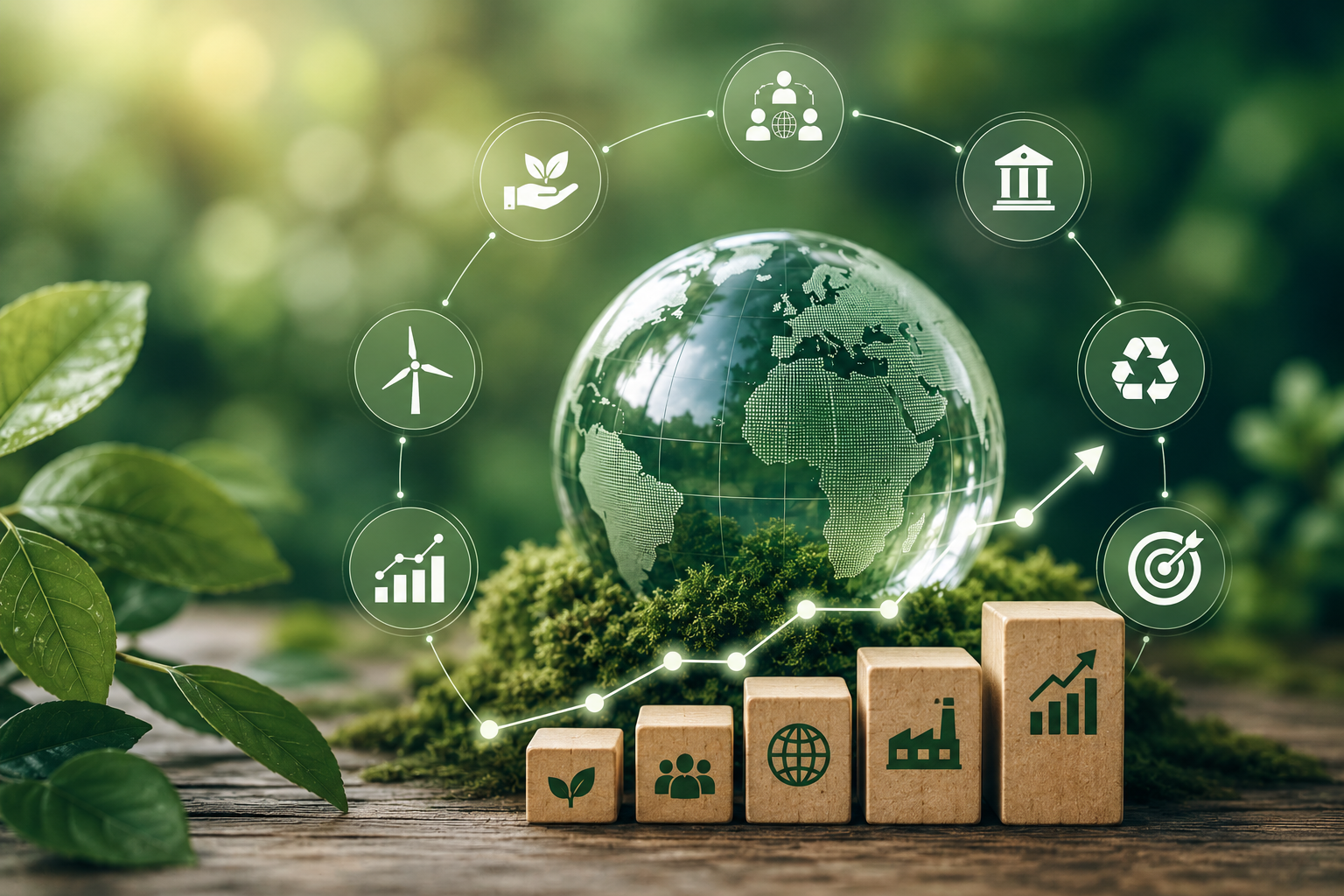
What Is Sustainability Performance Management?
Sustainability Performance Management (SPM) is a continuous, strategic process that enables organizations to define, measure, and improve their environmental, social, and governance (ESG) performance.
Unlike static sustainability initiatives, Sustainability Performance Management integrates sustainability directly into business strategy, turning goals into measurable actions and long-term value.
According to industry frameworks, SPM begins with defining sustainability objectives, followed by implementing initiatives, tracking progress through KPIs, and continuously improving outcomes.
Sustainability Performance Management vs Reporting
A common misconception is that sustainability performance management and reporting are the same, they are not.
Key Difference
- Sustainability Performance Reporting focuses on disclosure
- Sustainability Performance Management focuses on action and improvement
Why This Matters
Sustainability reporting is the process of communicating ESG performance to stakeholders, ensuring transparency and accountability.
However, reporting alone does not drive change.
Performance management goes further by:
- Setting targets and strategic priorities
- Embedding sustainability into operations
- Monitoring performance in real time
- Driving continuous improvement
In simple terms:
Reporting tells stakeholders what happened.
Management ensures better results happen next.
Why Sustainability Performance Management Is Important
Organizations adopting SPM benefit from a more integrated and future-ready business model.
Key Benefits
- Strategic alignment: Sustainability becomes part of core decision-making
- Risk mitigation: Proactively address ESG risks and regulatory changes
- Improved financial performance: Sustainable companies often outperform long term
- Stronger brand reputation: Builds trust with customers and investors
- Operational resilience: Better prepared for environmental and market shifts
SPM ensures sustainability is not treated as a standalone initiative but as a core driver of long-term business success.
Core Components of Sustainability Performance Management
A structured SPM framework typically includes the following stages:
1. Define Sustainability Strategy
Identify material ESG issues and align them with business objectives.
2. Set Measurable Goals
Establish clear KPIs (e.g., carbon reduction targets, diversity metrics).
3. Implement Action Plans
Develop initiatives, assign responsibilities, and allocate resources.
4. Monitor Performance
Track progress using data systems, dashboards, and analytics tools.
5. Report and Communicate
Share performance with stakeholders through ESG or sustainability reports.
6. Continuous Improvement
Use insights to refine strategies and enhance impact over time.
The Three Dimensions of Sustainability Performance
Effective sustainability performance management is built on the triple bottom line:
Environmental
- Carbon emissions
- Emissions to land, air and water
- Energy efficiency
- Resource usage
- Waste management
- Biodiversity impact and net gain
- Circular economy
Social
- Employee wellbeing
- Local employment and recruitment
- Diversity & inclusion
- Social value creation
- Community impact
Economic (Governance & Financial)
- Ethical practices
- Risk management
- Long-term profitability
These dimensions ensure a holistic and balanced approach to sustainability.
Key Metrics and KPIs
To manage sustainability effectively, organizations must track meaningful indicators such as:
- Environmental KPIs: CO₂ emissions, energy consumption, waste, circular economy
- Social KPIs: Employee engagement, safety, diversity, local employment and procurement, social value creation
- Governance KPIs: Compliance, ethics, transparency
Standardised metrics improve comparability and transparency across organizations.
Enabling Sustainability Through Frameworks and Standards
Global frameworks help structure sustainability performance management:
- GRI (Global Reporting Initiative)
- SASB (Sustainability Accounting Standards Board)
- TCFD (Task Force on Climate-related Financial Disclosures)
- ISO 20400 (Sustainable Procurement)
For example, ISO 20400 connects procurement decisions to ESG outcomes, enabling organizations to measure and improve sustainability across supply chains.
Challenges in Sustainability Performance Management
Despite its benefits, organizations often face challenges such as:
- Data collection complexity and lack of standardization
- Balancing short-term financial pressure with long-term goals
- Organizational resistance to change
- High implementation costs
Overcoming these requires strong leadership, digital tools, and cross-functional collaboration.
Best Practices for Effective SPM Implementation
To successfully implement sustainability performance management:
- Embed sustainability into corporate strategy
- Align departments (e.g., procurement, finance, operations)
- Invest in data systems and analytics tools
- Engage employees and stakeholders
- Regularly review and update KPIs
From Reporting to Real Impact
Many organizations start with sustainability reporting, but true impact comes from closing the gap between reporting and management.
A mature approach to sustainability means:
- Moving from static reports → dynamic performance systems
- Shifting from compliance → value creation
- Transitioning from measurement → transformation
Conclusion
Sustainability Performance Management is the bridge between intent and impact.
While reporting provides transparency, SPM drives real, measurable change, helping organizations improve ESG outcomes, strengthen resilience, and create long-term value.